
In this blog post, we describe the Master Vault, a vault-of-vaults automated trading strategy. Master Vault is a DeFi vault that trades a portfolio of other vaults.
What is Master Vault?
Master Vault is an ERC-4626 standard vault that allocates to other vaults. The vault aims to provide users with an automated allocation strategy that delivers returns beyond what you can get from lending protocols and stablecoins by taking on some volatility and duration risk.
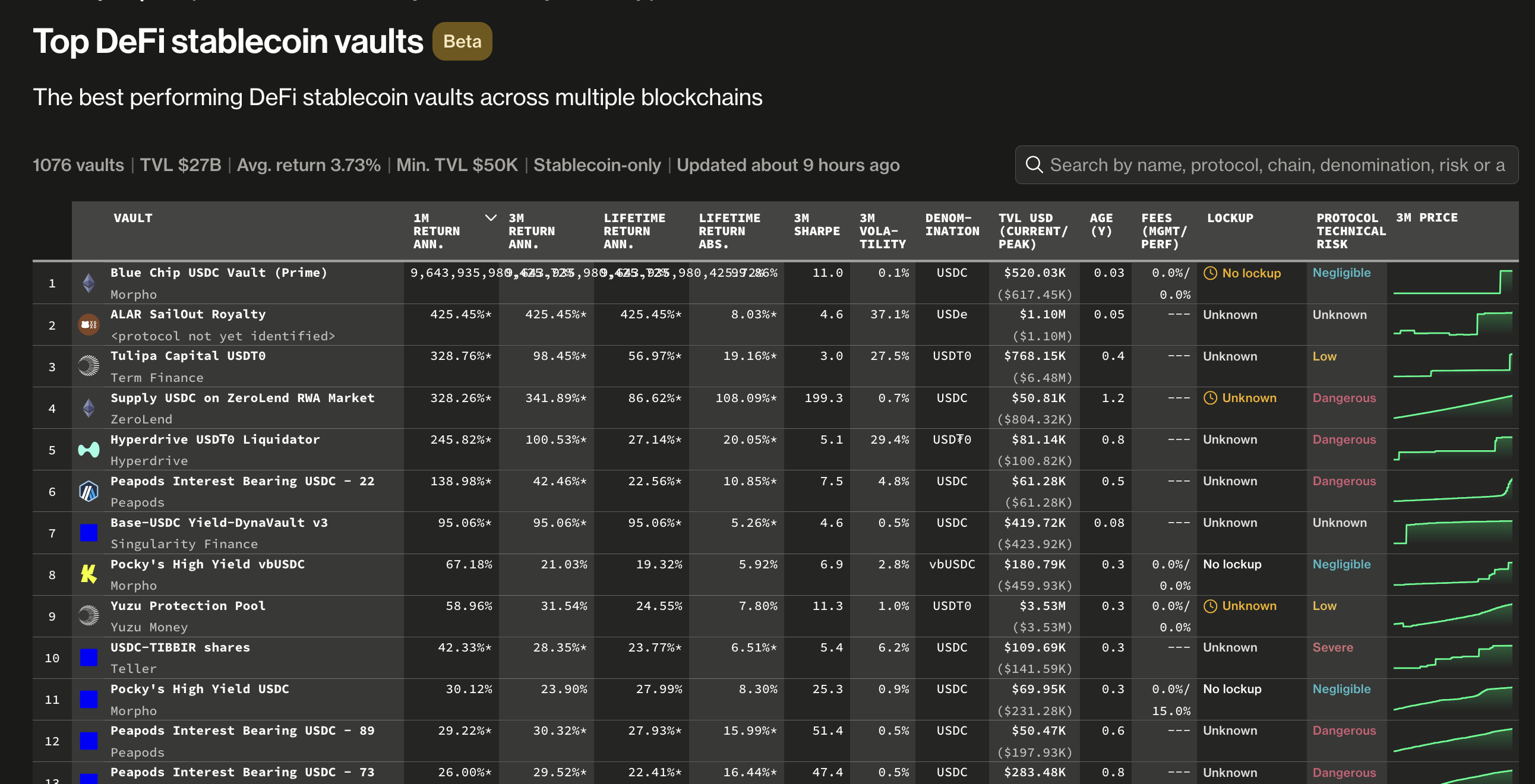
The strategy edge comes from Trading Strategy's proprietary DeFi vault benchmark and indexing product. Currently, over 2,000 stablecoin vaults across 20 EVMs are listed on the dahboard, with their historical performance and risk characteristics. The vault strategy is not tied to a single protocol or ecosystem, enabling greater diversification of yield sources.
Strategy logic
The strategy automatically rebalances capital into the best available vaults and is not limited to lending vaults only.
- The strategy rebalances weekly to the best-performing vaults based on the sixty-day historical returns.
- The vaults are selected from the vault index with a whitelisting process by the Trading Strategy proto-DAO, with a diversification across underlying activity and protocols
- Both locked (redemption after a lockup period) and unlocked (instant redemption) positions are mixed
- A small cash-on-hand buffer is maintained for on-the-spot redemptions.
Master Vault initially takes 5% performance fee.
Trading universe
In the first beta version, Master Vault will deploy capital only on Arbitrum vaults. In the second phase, a cross-chain component is added to enable this type of vault strategies to deploy capital to vaults across many chains and protocols, including non-EVM chains, such as native Hyperliquid, GRVT, Lighter, and Orderly.
The trading universe opportunities consist of
- DeFi lending
- Market making
- Quant trading strategies
- Real-world asset lending
This provides some variety in yield sources, and the strategy is not fully dependent on cryptocurrency market cycles or price correlations.
Beta version
For the first Arbitrum version, the following vaults are considered
- Ostium: market making
- gTrade: market making
- gmUSDC
- IPOR
- Lagoon
- Plutus plHEDGE: proprietary trading
- D2 HYPE++
- etc.
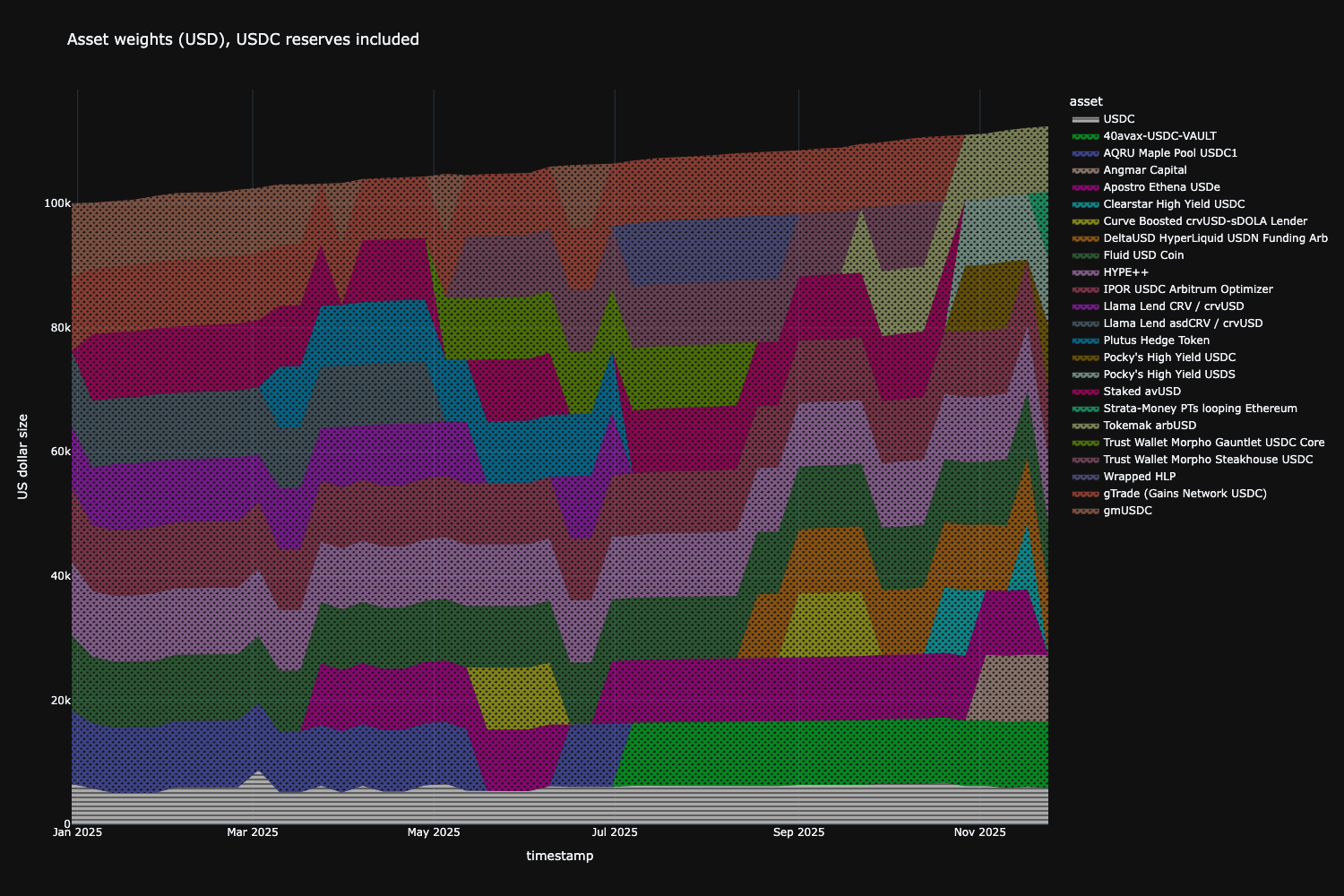
See the full backtesting notebook for details.
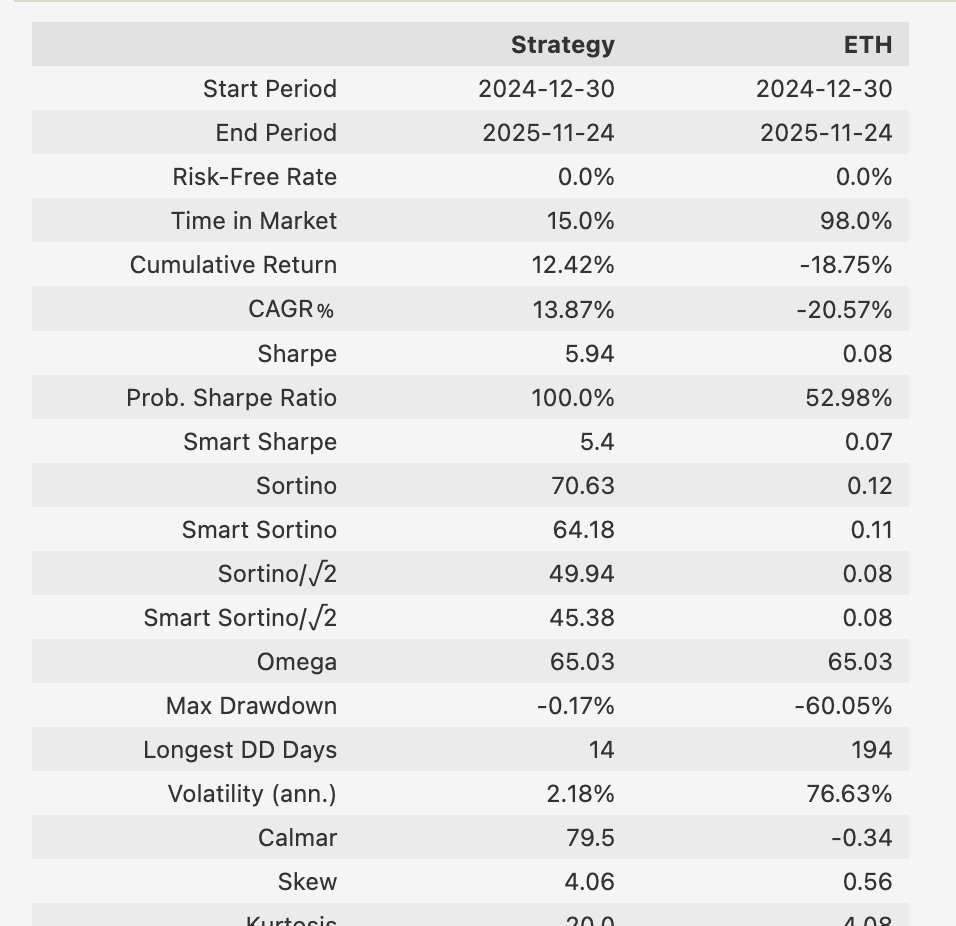
With these, the backtest results show approximately 13% annualised returns and a Sharpe of 3.6, with the caveat that vaults have existed for only a year or two and the backtesting history is somewhat limited.
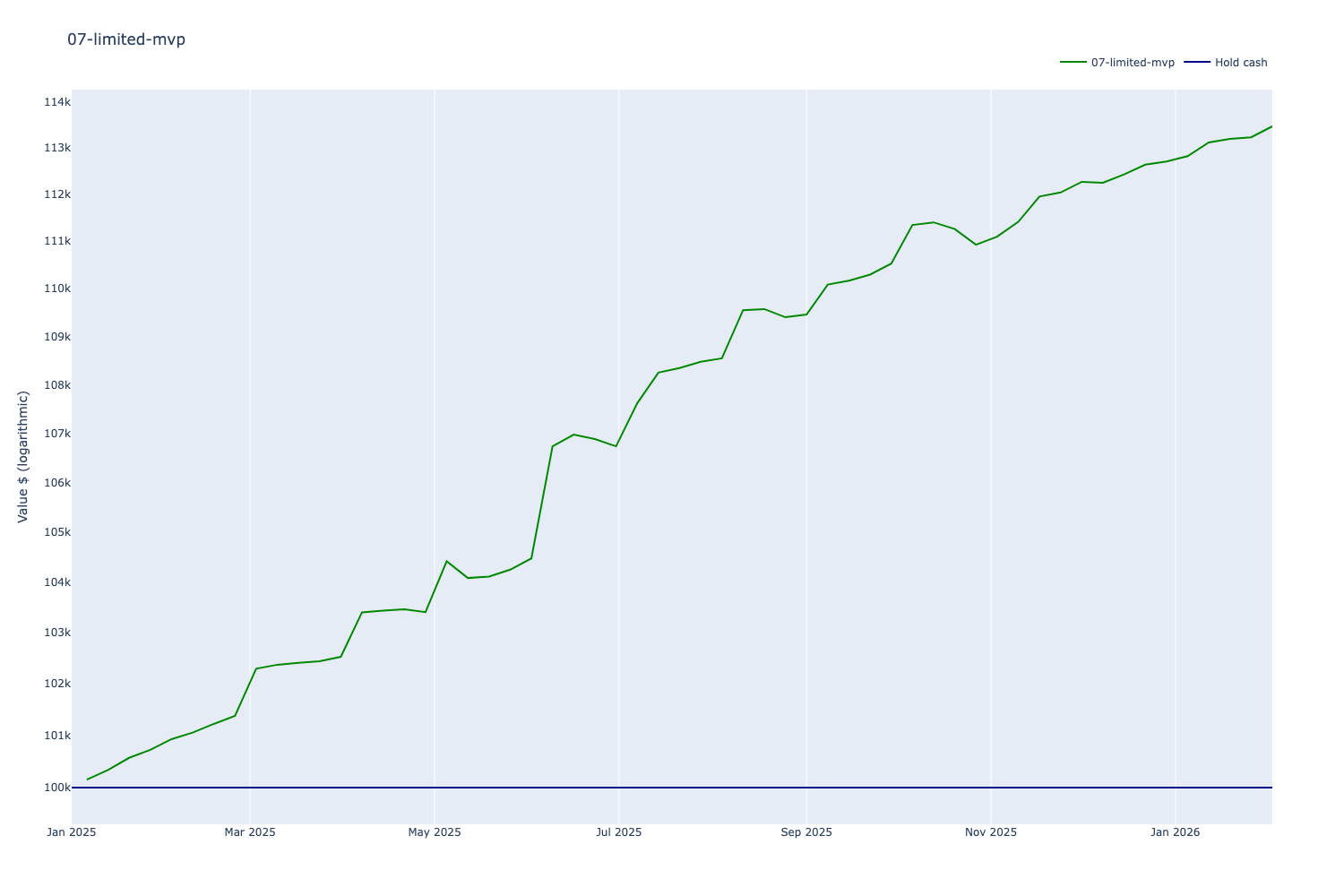
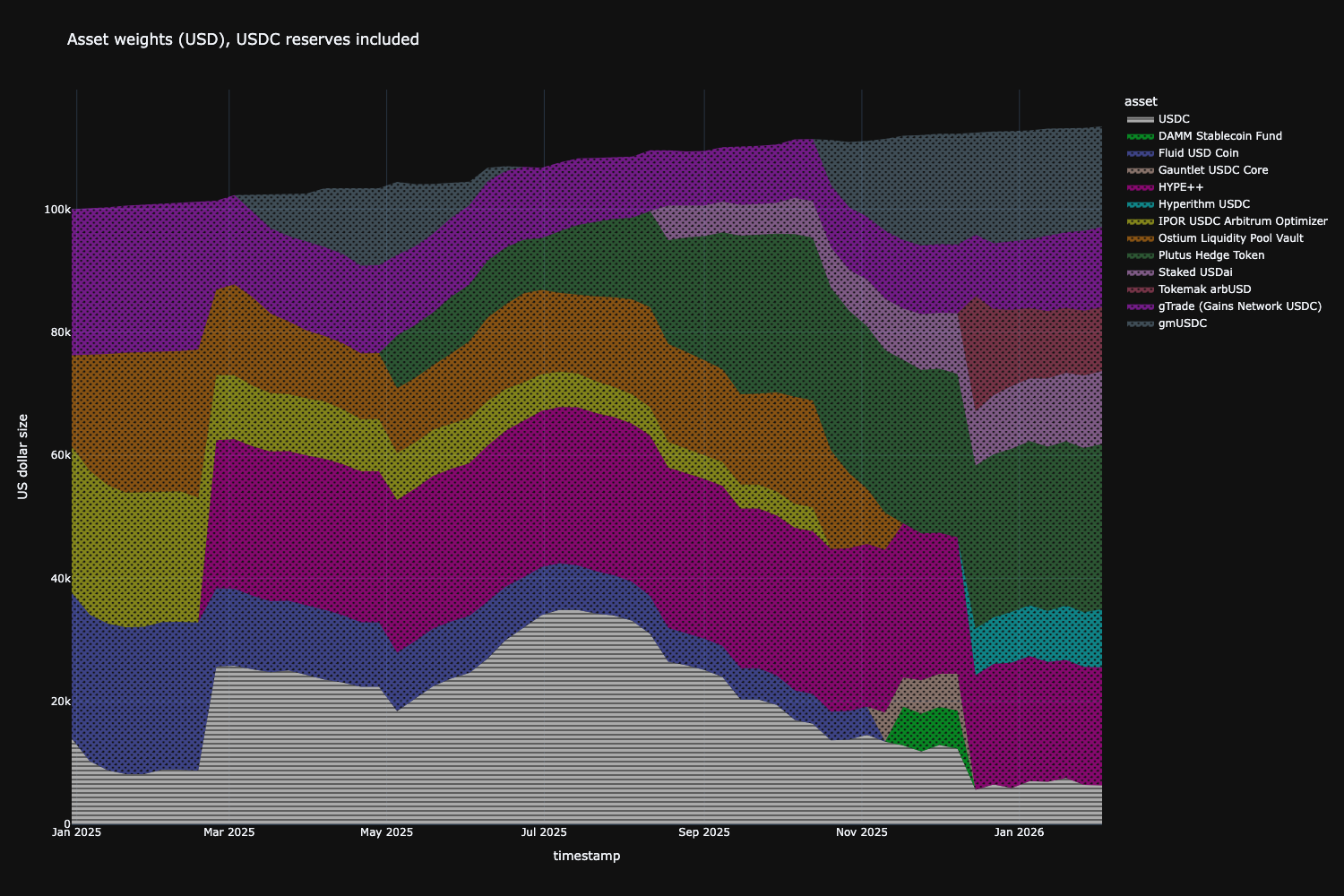
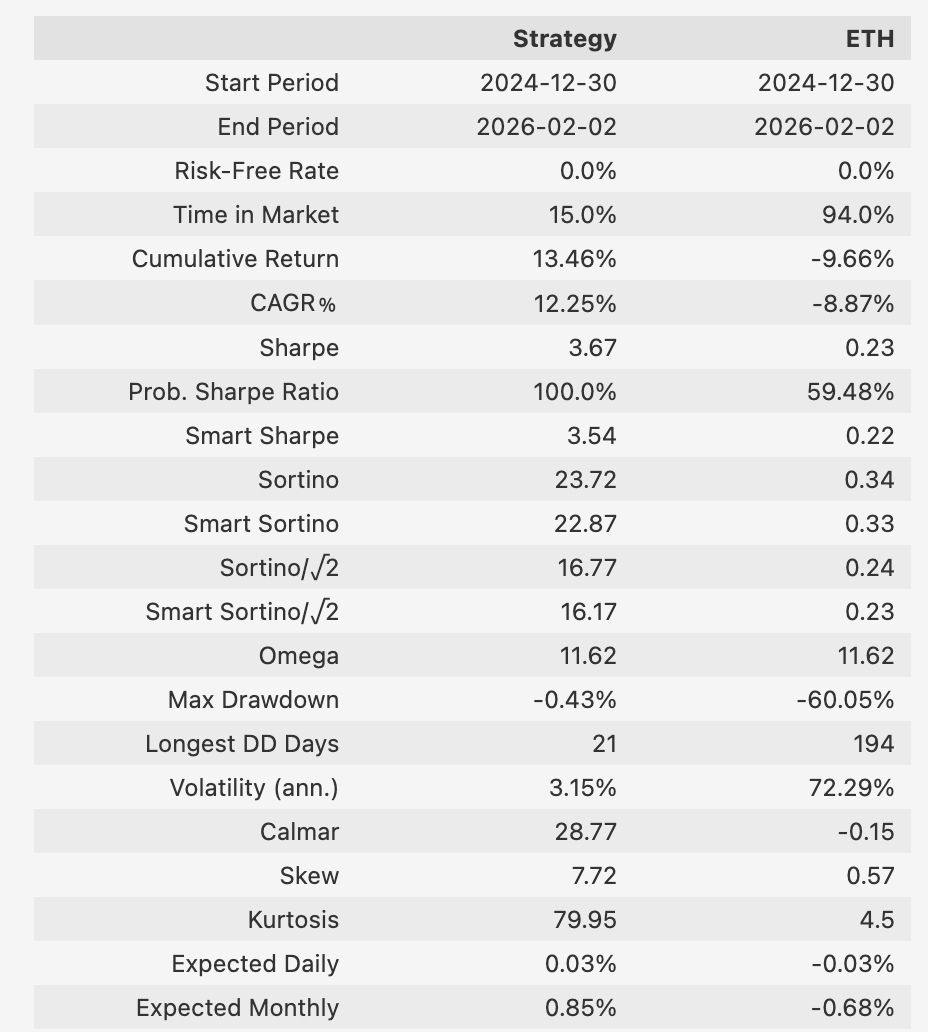
We see that a diversified, weighted vault strategy has low volatility and drawdown, despite the underlying allocation to vaults that exhibit volatility and drawdown.
Full trading universe
The first version of the strategy is limited to Arbitrum-only vaults, however this restriction will go away with a multichain solution in the future. For the full trading universe, we can consider any vault deployed across any EVM blockchain.
For a larger cross-chain trading universe, the backtest shows a diversified portfolio with annual returns of approximately 14% and a Sharpe of 4.5.
Risk management
Given the young age of the DeFi ecosystem, it has been troubled by issues such as hacks and extreme market volatility. Regardless of the quality of due diligence, these risks cannot be fully mitigated; some positions may eventually need to be written down to zero.
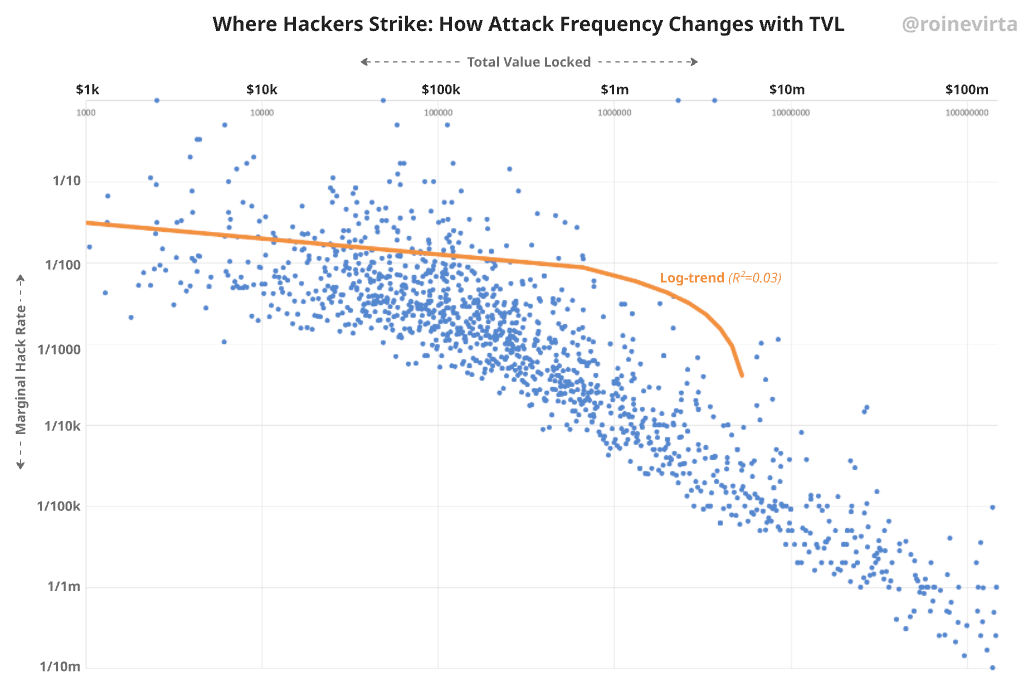
To minimise the impact of these adverse events, the trading positions are diversified across several vaults and protocols. Because the Master Vault strategy is automated, there is little downside to having a long list of small positions.
The goal is to have at least 20 positions in the vault yielding 10% annualised returns. With this yield, it is possible to afford to fully lose 1-2 positions a year and still have positive returns for a year. As of the writing of this, the Trading Strategy vault benchmark includes 50+ vaults yielding more than 10% annualised.
The following risk parameters are utilised in the first Master Vault
- Number of desired vault positions held in the portfolio: Aim to have at least 10+ open positions at a time.
- Maximum concentration: maximum allocation of 10% of the total portfolio to a single vault or vault protocol, to limit the risk of protocol being compromised.
- Maximum participation: limit the allocated position size to be a small 2.5% of the total target vault TVL, to avoid losses in the case of illiquidity events.
Security
The Master Vault smart contract is based on the Lagoon Finance protocol. Lagoon Finance has undergone several audits and currently has a TVL of $100M+ across its ERC-7540 smart contracts. Additional integration contract "guard" is developed by Trading Strategy and will be separately audited.
An off-chain oracle is used to calculate position rebalances. Master Vault can only move capital across whitelisted vaults. Even if the off-chain oracle would get compromised, it's difficult for an attacker to exit with the capital.
Challenges
The main challenges with vaulted strategies currently are
- Smart contract flows are unsupported by perp DEXes: The deposit/withdraw incompatibility of perpetual futures DEXes with smart contracts (Hyperliquid, Aster, others). Either the deposit or withdrawal operation needs a hot wallet private key, also known as an Externally Owned Account (EOA).
- Bridging: Due to Ethereum's rollup-centric scaling roadmap, vaults and liquidity are fragmented across various layer-2 chains. Because Ethereum does not have synchronised messaging standards across these chains, native bridging is slow (withdrawing takes multiple days). Centralised bridging solutions, which fill the gap, are expensive, often charging 0.5% - 1% per transfer, and insecure.
- Duration mismatch: The most profitable vaults come with the most complex trading strategies. To trade such a strategy, capital must be locked in trading positions. This means there are no instant withdrawals, as in lending pools, and each vault has its own withdrawal window. For example, the withdrawal window for Ostium/gTrade vaults can be 3-12 days, depending on whether the vault is profitable. There will be a capital mismatch during rebalancing, and complex logic must be implemented to maintain the cash-in-hand buffer.
In the beta version, manual intervention and multisignature solutions may be required to work around these challenges. We will document and highlight all of these when/if we need to utilise them.
We believe that all of these challenges can be properly addressed over time. Maturing perpetual futures exchange will begin offering direct deposit support for smart contract-based vaults and wallets. Ethereum improvement proposals will enable more efficient cross-chain communication, eliminating the need for third-party bridges.
Next steps
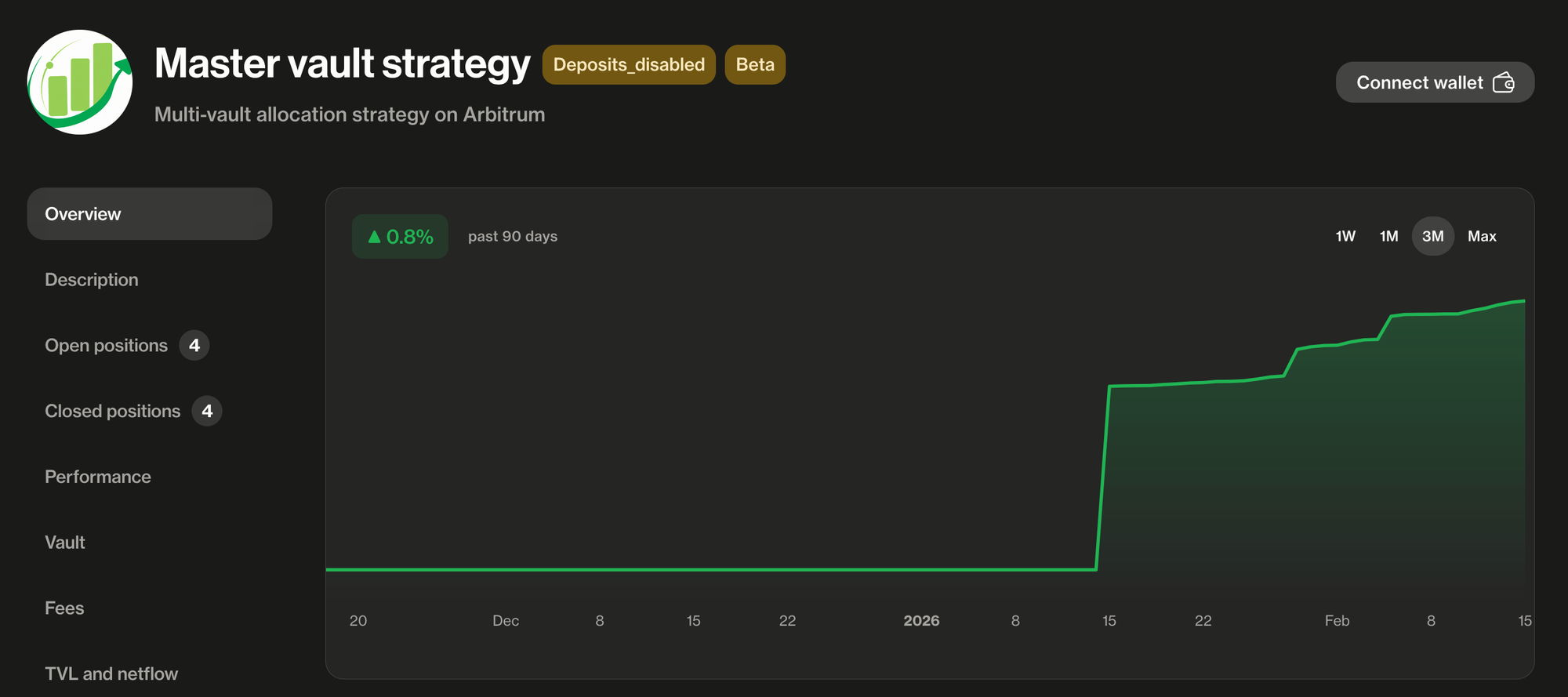
Master Vault is now open for the early whitelisted participants. If you would like an early access invite, please let us know by expressing your interest by email: vaults @ tradingstrategy.ai
For any questions or comments, please join our Discord. In particular, we would like to hear from you if you would like your vaults included in this strategy or in our vault benchmark.